
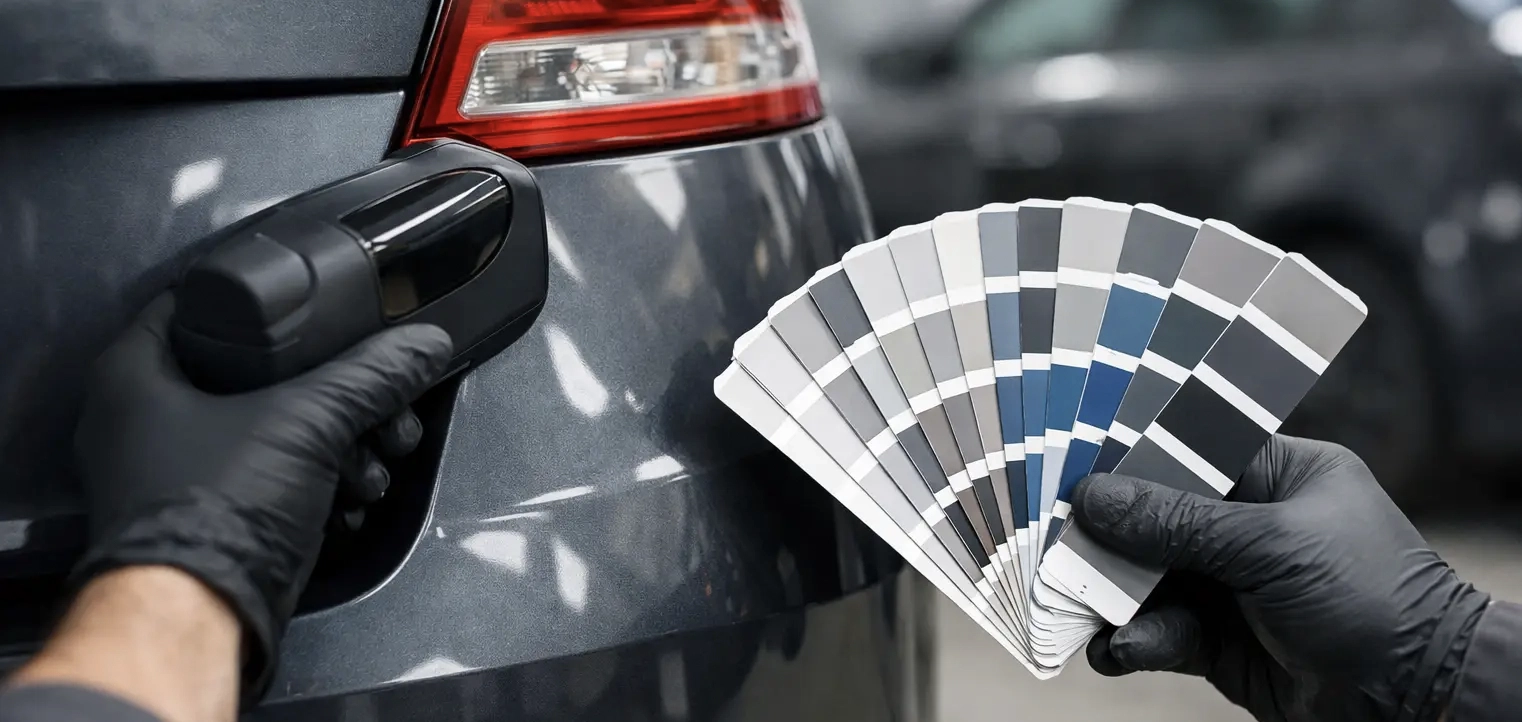
Paint & Colour Matching in Potters Bar at AG Body Shop
Paint and colour matching in Potters Bar requires more than finding the original paint code. Vehicle age, sunlight, previous repairs, production colour variants, panel material and application can all influence how the existing finish appears.
AG Body Shop provides colour assessment and automotive refinishing for suitable body, bumper, accident, scratch and full-respray projects. Work may include reviewing the finish, selecting a formulation, preparing the surface, applying the paint system and blending where required.
The aim is to create a consistent transition between the refinished area and the surrounding vehicle. The correct approach depends on the colour, repair position, existing paint condition and number of panels involved.
Colour AssessmentVariant ReviewPanel & Bumper RefinishingPaint Blending
Paint & Colour Matching in Potters Bar
Automotive colour matching selects and applies a finish that works with the vehicle as it appears now. The manufacturer paint code is an important reference, but it does not automatically account for ageing, environmental exposure or earlier refinishing.
A repaired panel is viewed beside surrounding bodywork, so adjoining surfaces form part of the assessment even when only one component requires repair.
The paint code is a starting point, not a visual guarantee.
The existing finish, available colour variants, panel material and repair position must also be considered before refinishing begins.
Paint Codes and Colour Variants
A paint code identifies the colour originally assigned to the vehicle. Depending on the manufacturer and model, it may appear on a vehicle label, identification plate or within manufacturer information.
One code can have several production variants. A variant may be slightly lighter, darker, warmer or cooler than another formulation carrying the same basic code.
The formulation must be considered alongside the vehicle. Repaired panels may mean the nearest surface is not the most reliable reference.
Solid, Metallic and Pearl Finishes
| Paint Type | Main Characteristic | Matching Consideration |
|---|---|---|
| Solid colour | No primary metallic or pearl effect | Tone, depth, fading and earlier paintwork |
| Metallic colour | Reflective particles within the finish | Brightness, particle orientation and viewing angle |
| Pearl or effect colour | Effect pigments creating depth or colour movement | Ground colour, effect coverage and transition |
| Multi-stage finish | Separate colour, effect and clear stages | Consistency through each application stage |
Metallic and pearl finishes change with viewing angle because effect-particle orientation influences brightness and colour movement.
How We Assess the Existing Finish
The vehicle and repair area are reviewed together. Relevant factors may include:
- Manufacturer paint code and available variants
- Current colour, gloss and clear-coat condition
- Age, fading and environmental exposure
- Earlier paint repairs on adjoining panels
- Plastic and metal component differences
- Solid, metallic, pearl or multi-stage finish
- Repair size, position and panel boundaries
- Whether blending may be appropriate
The comparison area should be clean and viewed from several angles under suitable lighting.
Choosing a Reference Area
More than one surrounding area may need review because the nearest panel could already have been repainted.
Our Paint Matching and Refinishing Process
1. Assess the Repair and Surrounding Panels
We identify the bodywork, surface preparation and paint areas required. The repair may involve a scratch, dented panel, bumper, replacement component, accident repair or wider vehicle respray.
2. Review the Paint Information
The vehicle’s paint code and available formulations are considered alongside its current appearance. The selected route reflects the actual finish rather than relying on the code alone.
3. Prepare the Repaired Surface
Dents, scratches, bumper damage, unstable coatings and repair edges must be corrected before colour application. Suitable primers and preparation materials are used according to the repair and paint system.
4. Apply the Colour
The selected colour is applied across the agreed area with coverage suited to the paint type and panel shape.
5. Blend Where Appropriate
Where a direct edge-to-edge result may remain noticeable, colour can be transitioned into a suitable adjoining area. Blending is selected according to the colour, panel layout and existing finish.
6. Apply the Final Clear Finish
Where required, clear coat provides the final gloss and protective surface. The clear-coated area may be wider than the colour repair so the panel can be finished consistently.
7. Cure and Inspect
The completed work is reviewed for coverage, colour transition, effect appearance, gloss and surface consistency.
When Paint Blending May Be Required
Paint blending gradually transitions the new colour into a suitable adjoining area. It may be appropriate when:
- The colour has a sensitive metallic or pearl effect
- The vehicle shows age-related colour change
- A replacement panel sits beside a large visible surface
- The nearest formulation is close but may show a hard transition
- Panel shape or lighting makes small variation more noticeable
Blending is not automatically required for every repair. Natural panel boundaries, a suitable direct match or a complete respray may make it unnecessary.
Blending is a controlled transition, not an automatic instruction to repaint the whole vehicle.
The included colour and clear-coat areas should be identified within the agreed refinishing scope.
Plastic Panels and Previous Paintwork
Plastic and Metal Components
A painted plastic bumper may differ slightly from adjoining metal because its shape, substrate and light reflection differ.
Suitable bumper refinishing can be coordinated through our plastic bumper repair service.
Previously Refinished Panels
A vehicle may contain factory paint and repairs completed at different times. The new work must reflect its current condition rather than assuming every panel matches the original specification.
Surface Preparation Still Matters
Colour matching cannot hide panel distortion, unstable filler, peeling paint or poor repair transitions. These defects must be corrected before final refinishing. General panel work can be coordinated through our car body repair service.
Paint Matching Cost and Timing
Paint matching is normally part of the complete repair quotation rather than a separate fixed-price operation.
Cost and timing can be influenced by:
- Paint type and number of application stages
- Condition of the existing finish
- Earlier repairs and colour variation
- Size and position of the repair
- Number of panels being refinished
- Need for blending
- Plastic or metal component material
- Bodywork and preparation before paint
- Dismantling, curing and reassembly
Photographs show the repair location but are not reliable enough for final colour selection because cameras, lighting and screens alter appearance.
Why Choose AG Body Shop, Related Services and Guides
Why Choose AG Body Shop?
- Assessment of the current vehicle finish
- Review of paint information and available variants
- Consideration of earlier repairs and panel materials
- Preparation of suitable repaired panels and bumpers
- Solid, metallic and pearl refinishing
- Blending where appropriate
- Clear explanation of the agreed paintwork scope
- Final review of colour transition and finish
View our completed body and paint projects, read our customer reviews or review our car body repair FAQs.
Related Paint and Body Services
Helpful Paintwork Guides
Frequently Asked Questions About Paint & Colour Matching
Is the paint code enough to match the colour?
No. It identifies the original colour family, but available variants, ageing, earlier repairs and panel material also affect the current appearance.
Can metallic and pearl colours be matched?
They can be assessed and refinished, but application and effect-particle orientation influence how the colour appears from different angles.
What is paint blending?
Blending gradually transitions colour into a suitable adjoining area where a direct edge-to-edge repair may remain noticeable.
Will an adjoining panel need painting?
Not always. The need for blending depends on the colour, repair position, surrounding finish and panel layout.
Why can a bumper look different from the body?
Plastic and metal components differ in shape, substrate and light reflection. Some bumper-to-body variation can already exist in the original finish.
Can colour be selected from photographs?
Photographs support the initial assessment but are not reliable enough for final colour selection because lighting, cameras and screens alter appearance.
How much does paint matching cost?
It is normally included within the wider body or paint repair quotation. Cost depends on preparation, colour system, panels and blending.
What photographs should I send?
Send the complete vehicle, the full affected panel, close views of the damage and adjoining panels from several angles.
Request a Paint and Colour Assessment
Send AG Body Shop your vehicle make, model, registration and clear photographs showing the complete affected panel and adjoining bodywork. We will review the visible repair and advise on the appropriate next step.
Start Your Paintwork Enquiry
Send your vehicle details and wide and close photographs showing the damaged area and surrounding finish.
Request a Paintwork AssessmentCall +44 7449 325756Email AG Body Shop
Explore our complete range of car body repair services, view our completed paint and repair projects or submit your vehicle information through our online assessment form.