

Car scratches can look similar at first glance but involve very different levels of damage. One mark may sit within the upper clear finish, while another can cut through colour, expose primer or reach the metal or plastic beneath. The repair method should therefore be based on depth, location and surrounding body condition rather than on the length of the scratch alone.
This guide explains the main types of car scratches and repair options, how to distinguish light surface marks from deeper paint damage, and when polishing, localised refinishing or broader body repair may be appropriate.
If your vehicle has scratches, dents or related cosmetic body damage, our scratch and dent removal service in Potters Bar covers suitable repairs. Smaller localised defects may also be assessed through our SMART repair service, while more extensive panel damage can be directed to car body repairs.
1. What Is a Car Scratch?
A scratch is damage created when something moves across the painted surface and removes, marks or deforms one or more coating layers. The important question is not only how long the scratch is, but how deep it goes and whether the panel underneath remains undamaged.
Automotive paint is usually a layered system rather than a single coat. The exact construction varies, but a typical refinished surface can include substrate preparation, primer, colour and a clear finish. A scratch may affect only the top layer or pass through several layers.
Why Scratch Depth Changes the Repair
A light mark within the upper finish may be suitable for controlled polishing or local correction. Once colour has been removed, polishing cannot recreate missing pigment. If primer, metal or plastic is exposed, the repair needs to restore the protective and visual coating layers rather than simply improve gloss.
Scratch length does not tell you scratch depth. A short sharp mark can require more repair than a much longer superficial scuff, so the damaged layers need to be assessed before choosing a method.
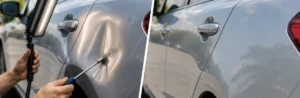
Scratches Can Include Dent Damage
A scrape along a door or quarter panel can leave both paint damage and a shallow dent. In that situation, correcting the coating alone would leave the panel shape unchanged. The bodywork and paint need to be considered together.
Our guide How to Know Whether a Dent Can Be Repaired explains the factors that affect dent repairability when deformation is part of the same incident.
2. Surface Marks and Clear-Coat Scratches
The lightest visible defects may sit on or within the upper finish rather than cutting through the complete paint system. They can include light wash marks, transferred material and fine scratches caused by dirty cleaning equipment or contact with an object carrying grit.
Transferred Material Is Not Always a Scratch
Sometimes the visible line is material deposited onto the paint rather than paint removed from it. A mark after contact with rubber, plastic or another painted object can partly be transfer sitting on the surface.
Clean the area carefully before judging depth. Aggressive rubbing before the mark has been identified can create additional damage.
Fine Clear-Finish Scratches
Very light scratches that remain within the upper finish may sometimes be improved by polishing, depending on their depth and the condition of the coating. Polishing refines the surface; it does not fill deep damage or replace missing colour.
Why the Fingernail Test Is Too Simple
The common fingernail test can provide a rough clue, but it is not a professional diagnosis. Nail shape, pressure, scratch width and coating texture vary. Look at the mark under good lighting and from several angles rather than relying on one quick test.
3. Scratches Through the Colour Layer
Once a scratch has removed colour, the repair becomes different from simple polishing. The missing coating has to be restored if the aim is to return the panel to a consistent appearance.
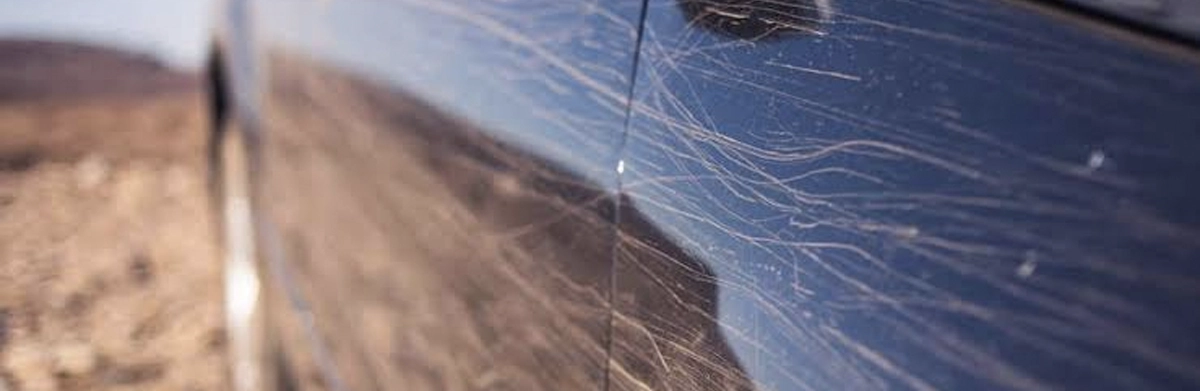
Deeper damage can appear as a narrow contrasting line, a wider scrape with irregular paint loss, several parallel marks or a scratch combined with a dent.
Why Polishing Cannot Restore Missing Colour
Once pigment has been removed, an abrasive polish cannot rebuild it. Continued polishing may improve the surrounding gloss while leaving the exposed line visible or reducing the remaining coating unnecessarily.
Localised Refinishing May Be Appropriate
Some suitable scratches can be repaired within a controlled local area, depending on size, position, colour and surrounding paint condition. This is where SMART repairs may be relevant for appropriate cosmetic defects.
Not every scratch is suitable for a localised repair. Damage near panel edges, across several panels or within a visually sensitive colour may require a wider refinishing approach.
4. Scratches Into Primer, Metal or Plastic
Deeper scratches can pass through the upper paint layers and expose primer, metal or plastic. These defects should be assessed as coating damage rather than treated as marks that can simply be polished away.
Exposed Metal
When bare steel is exposed, the protective coating has been breached and corrosion can become part of the problem if the area remains untreated. The repair should restore the damaged surface and coating system rather than simply cover the mark.
Exposed Plastic
A scratch through the coating on a plastic bumper does not create the same corrosion concern as exposed steel, but the plastic surface may still be gouged, deformed or roughened. The substrate needs suitable preparation before refinishing.
Where bumper damage includes deeper gouging, cracking or distortion, see our plastic bumper repair service.
Primer Exposure and Deep Gouges
Visible primer means the colour and clear finish have been removed. A deep gouge can also change the surface shape, so the area may need correction before paint is applied.
Once the substrate is exposed, the job is no longer just about shine. The repair has to restore the surface and missing coating layers before the finished colour can look consistent again.
5. Why Scratch Location and Shape Matter
Two scratches of similar depth can require different repairs because of where they sit on the vehicle.
Panel Edges and Body Lines
Edges can make local refinishing more difficult because there is less space for a controlled transition. A scratch crossing a styling line may also coincide with deformation that needs bodywork before paint.
Several Panels
A long scrape along the side of a vehicle can cross a wing, door and quarter panel. Even if the scratch depth is similar, the repair should be planned as a connected job rather than as unrelated marks.
Trim, Lamps and Bumper Corners
Handles, mouldings and lamps can limit access or need removal for correct preparation. Bumper corners also behave differently from metal panels because of their shape and plastic construction.
6. Choosing the Right Scratch Repair Option
There is no single repair method for every scratch. The appropriate route depends on which layers are affected, whether the panel shape has changed and how large an area needs refinishing.
Cleaning and Surface Correction
If the mark is contamination or a very light upper-surface defect, suitable cleaning or controlled polishing may be enough to improve it. This should only be attempted once the mark has been identified correctly.
Localised Cosmetic Repair
Suitable small scratches and scuffs may be candidates for a localised repair where the damage, colour, position and surrounding finish allow a controlled result. The repair should not be kept artificially small if a wider area is required for correct preparation and refinishing.
Conventional Panel Refinishing
Deeper scratches, larger scrapes and defects in visually sensitive positions may require conventional preparation and refinishing of a broader panel area. If the scratch is accompanied by a dent, panel correction comes before the paint stage.
Bumper or Broader Body Repair
Plastic bumper scratches may include gouging, cracking or deformation. Where a scrape affects several panels, reveals previous filler or forms part of collision damage, the repair may sit more naturally within car body repairs or accident repairs.
| Visible Condition | Typical Assessment Direction |
|---|---|
| Transfer or light surface mark | Clean and assess before abrasive correction |
| Fine clear-finish scratch | Possible controlled surface correction |
| Colour removed | Paint repair and refinishing assessment |
| Primer, metal or plastic exposed | Surface preparation and coating restoration |
| Scratch plus dent or distortion | Body repair before final refinishing |
7. Paint Matching, Blending and Refinishing
Once a scratch requires repainting, the quality of the repair depends on more than covering the damaged line with the manufacturer’s colour code.
The Paint Code Is a Starting Point
The original code helps identify the relevant colour family, but production variants, age and previous refinishing can affect the vehicle’s current appearance. The body shop therefore considers the paint already on the vehicle.
Why Blending May Be Used
In some repairs, a controlled colour transition into a suitable adjoining area can create a more consistent visual result than treating the repaired section as an isolated block. Whether blending is appropriate depends on the colour, position and surrounding finish.
Our guide Why Professional Paint Matching Matters explains paint codes, variants, metallic and pearl effects, panel materials and blending in more detail.
Preparation Matters as Much as Colour
A correct colour cannot hide poor surface preparation. Deep grooves, unstable old coatings, dent distortion and visible repair edges need to be corrected before final colour is applied.
For service information, see our paint and colour matching service.
8. Common DIY Scratch Repair Mistakes
Minor defects naturally tempt owners to try a quick correction, but some approaches can make the damaged area more difficult to assess or repair later.
Polishing Before Identifying the Scratch
Starting with a strong compound can remove healthy surrounding clear finish without fixing a scratch that has already passed through the colour.
Using Household Abrasives
Products not designed for automotive paint can create haze, uneven gloss or new scratches.
Applying Touch-Up Paint Too Thickly
Touch-up products can have practical uses in limited situations, but a thick raised application is not the same as a professional refinishing repair.
Sanding Without a Defined Repair Plan
Abrasive paper removes coating quickly. Sanding beyond the damaged area can expand a small defect into a larger refinishing job.
Ignoring Exposed Metal or Dent Damage
Exposed steel can develop corrosion, while paint cannot restore a deformed panel. These conditions should be addressed before final refinishing.
9. How to Get a Useful Scratch Assessment
A clear set of photographs can help determine whether the defect appears superficial, requires paintwork or forms part of wider body damage.
Take Wide and Close Photographs
Include:
- A wide image showing the affected side
- The complete damaged panel or bumper
- Close photographs from several angles
- Any dent, crease or deformation
- Visible primer, metal or plastic
- Adjoining panels if the scrape crosses more than one area
Clean the Area Gently First
Where practical, remove ordinary dirt using a suitable gentle wash method before taking close photographs. This helps separate contamination from actual coating damage. Do not aggressively polish the mark simply to make the photograph clearer.
Include Vehicle and Repair History
Provide the make, model and registration and briefly explain how the damage occurred. Mention known previous repairs in the same area because old filler or refinishing can affect the new repair.
Know the Limits of Photographs
A workshop may still need to inspect the vehicle physically where scratch depth, previous repairs, dent shape or damage around an edge cannot be judged reliably from images.
Review our vehicle repair process to see how assessment, bodywork, preparation, colour matching and refinishing fit together. Our completed projects also provide examples of body and paint work.
10. Frequently Asked Questions
Can all car scratches be polished out?
No. Polishing may improve suitable light surface scratches, but it cannot replace colour, primer or substrate that has been removed. Deeper damage requires an appropriate paint repair.
How can I tell if a scratch has gone through the paint?
Look for a contrasting line where colour is missing or primer, metal or plastic is visible. Lighting and contamination can be misleading, so professional assessment is more reliable than a single home test.
Does a scratch that catches a fingernail always need repainting?
Not always. The fingernail test is only a rough indicator. Scratch width, coating texture and pressure can change what you feel.
Can a deep scratch on a plastic bumper be repaired?
Many suitable bumper scratches and gouges can be assessed for repair, but the method depends on whether the plastic is only marked or is also cracked, distorted or damaged around its mountings.
Should I use touch-up paint on a deep scratch?
Touch-up paint may have limited practical uses, but it should not be confused with a professional refinishing repair. If appearance, surface level or wider damage matters, have the area assessed first.
What happens if a scratch has exposed bare metal?
The protective coating has been breached, so the area should be assessed before corrosion becomes an additional problem. The repair normally needs suitable preparation and restoration of the coating system.
Can a scratched panel also need dent repair?
Yes. A scrape can deform the panel at the same time as damaging the paint. The panel shape should be corrected before the final refinishing stage.
What should I send for an initial scratch assessment?
Send the vehicle make, model and registration, a wide view of the affected side, the complete panel or bumper and close photographs from several angles. Include any denting, exposed substrate or adjoining damage.
Not Sure How Deep the Scratch Is?
Send AG Body Shop clear wide and close photographs of the damaged area before attempting aggressive polishing or sanding. We can review the visible condition and advise whether the next step should be a workshop assessment for cosmetic repair, bodywork or refinishing.
Request a Scratch Assessment
Send your vehicle details and clear photographs showing the complete affected area, scratch depth where visible and any related dent or panel damage.
Explore our car body repair services, view completed projects or read our frequently asked questions.